
Perplexity Numbat
Perplexity Numbat Review: Open-Source AI Agent Security Framework Explained.
MEDIA
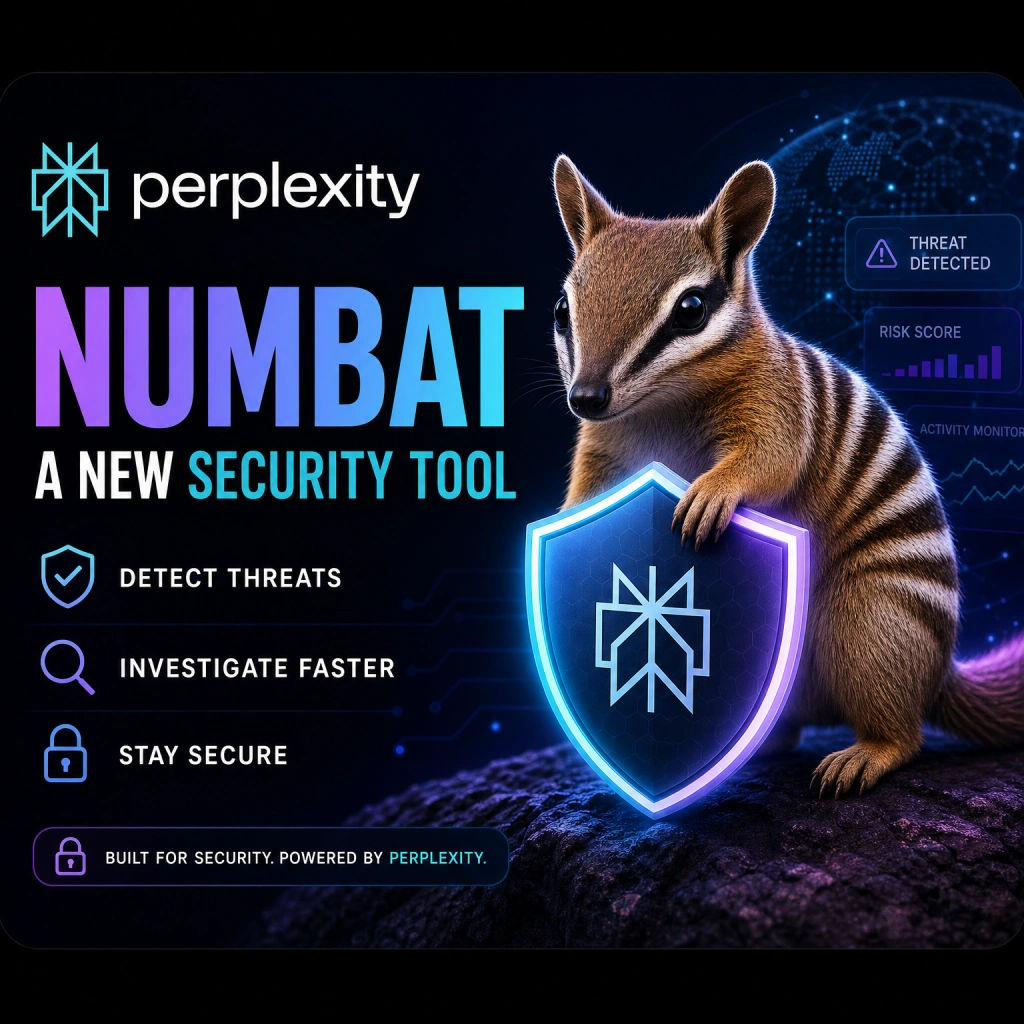
About Perplexity Numbat
Perplexity Numbat: The Missing Security Layer for AI Agents
The AI ecosystem has evolved rapidly over the past year. Developers are no longer building simple chatbots: they're deploying autonomous AI agents capable of browsing the web, executing code, interacting with APIs, modifying databases, and even controlling local systems.
While these capabilities improve productivity, they also introduce an entirely new attack surface.
To address this growing challenge, Perplexity AI has open-sourced Numbat, an AI Agent Detection and Response (ADR) framework designed to monitor, inspect, and control AI agents before they perform potentially dangerous actions. According to Perplexity, Numbat works across multiple agent harnesses, supports real-time monitoring, allows pre-action blocking, and can reconstruct agent activity for forensic analysis.
In this article, we'll explore what Numbat is, how it works, its key features, advantages, limitations, and why it could become an essential component of every production AI stack.
What is Perplexity Numbat?
Perplexity Numbat is an open-source security layer for AI agents.
Instead of replacing your AI framework, it sits between the AI agent and the tools it wants to use.
Think of it as a security checkpoint.
Whenever an AI agent attempts to:
Execute terminal commands
Read or modify files
Call external APIs
Access databases
Interact with browsers
Use MCP tools
Perform privileged actions
Numbat observes those requests, evaluates whether they're safe, and can block or allow them based on configured policies before execution. Perplexity describes it as an "agent-detection and response layer" built to work across different agent harnesses.
yt source : perplexity
Why AI Agents Need Security
Traditional software follows predictable workflows.
AI agents do not.
An autonomous coding agent might:
Delete important project files
Leak API keys
Access sensitive documents
Install malicious dependencies
Execute unintended shell commands
Send confidential information externally
Without monitoring, these actions can happen automatically.
As organizations increasingly adopt agentic workflows, visibility and policy enforcement become critical.
This is the problem Numbat is designed to solve.
Key Features of Perplexity Numbat
1. Live Agent Monitoring
Numbat continuously observes agent activity rather than waiting until something goes wrong.
Developers can inspect:
Tool usage
Command execution
File operations
API requests
Agent reasoning flow
This provides much-needed visibility into autonomous systems.
2. Pre-Action Blocking
One of Numbat's strongest features is preventive security.
Instead of detecting malicious behavior after execution, it can stop risky operations before they occur.
Examples include:
Blocking file deletion
Preventing dangerous shell commands
Restricting sensitive API access
Preventing credential exposure
This dramatically reduces operational risk.
3. Cross-Framework Compatibility
Perplexity designed Numbat to work across different agent ecosystems rather than locking developers into a single framework. Community discussions highlight support across desktop, CLI, IDE, and gateway agent environments.
That makes it attractive for teams already using modern AI tooling.
4. Forensic Reconstruction
When something unexpected happens, security teams need to know:
What the AI attempted
Which tools it used
Which commands were executed
What sequence of events occurred
Numbat provides forensic visibility using session artifacts, making incident investigation easier.
5. Open Source
Unlike proprietary security products, developers can:
Inspect the code
Modify policies
Extend integrations
Contribute improvements
This transparency helps build trust.
How Numbat Works
At a high level, Numbat sits between the AI model and the tools it can access.
User
   │
   ▼
AI Agent
   │
   ▼
Numbat Security Layer
   │
 ┌─┴──────────────┐
 │                │
Policy Engine     Monitoring
 │                │
 └──────┬─────────┘
        ▼
Allowed Tools
    │
    ├── Shell
    ├── Browser
    ├── Database
    ├── APIs
    ├── Files
    └── MCP Servers
Instead of allowing unrestricted execution, every action passes through policy checks before reaching the target tool.
Real-World Use Cases
AI Coding Assistants
Prevent an AI coding agent from:
Removing production code
Deleting Git repositories
Installing unknown packages
Accessing SSH keys
Enterprise AI Assistants
Organizations can restrict access to:
HR databases
Financial records
Customer information
Internal APIs
MCP Server Security
Developers building Model Context Protocol (MCP) applications can use Numbat to inspect and regulate tool calls, complementing MCP-based workflows.
Browser Automation
For AI agents controlling browsers:
Prevent unintended purchases
Block unauthorized form submissions
Restrict website access
Advantages of Perplexity Numbat
Open Source
No vendor lock-in.
Preventive Security
Stops dangerous actions before execution.
Developer Friendly
Can integrate into existing AI workflows without replacing your current framework.
Better Visibility
Provides insight into what AI agents are actually doing.
Security Compliance
Helpful for organizations needing audit trails and controlled AI behavior.
Limitations
No tool is perfect.
Here are some considerations before adopting Numbat.
Still an Early Project
As a newly open-sourced project, the ecosystem, integrations, and community are still developing. Expect rapid iteration and changing capabilities.
Learning Curve
Teams will need to:
Define policies
Understand agent behavior
Configure monitoring rules
Performance Overhead
Inspecting every agent action may introduce some latency, depending on workload and policy complexity.
Framework Coverage
Although designed to support multiple agent environments, compatibility with every AI framework or custom toolchain may require additional integration work.
Who Should Use Numbat?
Numbat is particularly useful for:
AI application developers
Enterprise engineering teams
Security engineers
DevSecOps professionals
Organizations deploying autonomous AI agents
Teams building MCP-enabled applications
Companies exposing AI agents to production environments
For hobby projects with minimal permissions, it may be unnecessary. For production systems with broad tool access, it can provide an important layer of defense.
Is Perplexity Numbat Better Than Traditional Security Tools?
Traditional security software focuses on:
Networks
Servers
Endpoints
Containers
Numbat focuses on AI agent behavior.
Rather than protecting infrastructure alone, it observes and controls what an AI agent is trying to do, filling a gap that conventional security tools were not designed to address.
PROS
- + Open Source – The source code is publicly available, allowing developers to inspect, modify, and contribute to the project.
- + Pre-Action Security – Can block potentially dangerous actions before an AI agent executes them, reducing security risks.
- + Real-Time Monitoring – Continuously tracks agent activities such as tool usage, file access, API calls, and command execution.
- + Cross-Framework Support – Designed to integrate with multiple AI agent frameworks rather than being tied to a single ecosystem.
- + Audit & Forensics – Provides detailed logs and execution history, making it easier to investigate incidents and debug agent behavior.
- + Policy-Based Access Control – Enables developers to define custom rules for what AI agents can and cannot do.
- + Developer Friendly – Can be integrated into existing AI applications without requiring a complete redesign.
- + Extensible Architecture – Supports adding custom policies, tools, and integrations based on project requirements.
- + Improved AI Governance – Helps organizations enforce security and compliance policies for autonomous AI systems.
- + Active Backing by Perplexity – Developed by Perplexity AI, increasing confidence in continued development and community interest.
CONS
- − Early-Stage Project – As a relatively new open-source framework, some features and integrations are still evolving.
- − Limited Community Resources – Fewer tutorials, third-party plugins, and community examples compared to mature security tools.
- − Configuration Complexity – Setting up effective security policies requires planning and understanding of AI agent workflows.
- − Performance Overhead – Monitoring and evaluating every agent action may introduce additional latency in some workloads.
- − Framework Integration Effort – Custom or less common AI frameworks may require additional development for full compatibility.
- − Learning Curve – Developers and security teams need time to understand policy creation, monitoring, and incident analysis.
- − Not a Complete Security Solution – It complements traditional security tools but does not replace firewalls, endpoint protection, or infrastructure security.
- − Policy Maintenance Required – Security rules need to be updated as applications evolve or new tools are introduced.
- − Potential for False Positives – Overly restrictive policies may block legitimate agent actions until fine-tuned.
- − Smaller Ecosystem – Compared to established DevSecOps and security platforms, the surrounding ecosystem is still relatively limited.
CONCLUSION
AI agents are rapidly moving from experimental tools to production systems that can execute code, manipulate files, browse the web, and interact with enterprise services. As these capabilities expand, organizations need ways to observe, govern, and, when necessary, prevent risky actions before they occur.
Perplexity Numbat addresses this emerging need by introducing a dedicated security layer for AI agents. Its combination of live monitoring, policy enforcement, pre-action blocking, and forensic analysis makes it a compelling addition to modern AI development workflows. While the project is still young and likely to evolve, its open-source approach and focus on agent security make it one of the more promising initiatives in the agentic AI ecosystem.
If you're building or deploying autonomous AI systems in production, Numbat is worth evaluating—not as a replacement for existing security controls, but as a complementary layer specifically designed for the unique risks of AI agents.
Also Read : Run AI Models Offline on Your Smartphone
UPVOTES